



Materials, certificates and responsibility at Gugguu
All our materials are carefully selected, tested and safe, from the fabric to the smallest details. We consider it important to take responsibility for our environment. We stand firmly behind our values and ethical practices at every stage of our work and in every situation.
Most of our fabric suppliers are European, and our fabrics come from Portugal, Italy, Latvia and Lithuania, among other countries. The fabrics for our outerwear come from China. Building lasting relationships with our material suppliers is of primary importance to us, as this enables us to guarantee the quality of our materials and develop them to be even better.
We continuously work on developing our materials: we test, wash and look for new, more sustainable options. We aim to increase the proportion of organic cotton in our products and work continuously towards this goal. Our products will increasingly contain recycled polyester and recycled nylon.
We donate surplus fabrics generated during the design process to educational institutions and day-care centres. Fabric left over from production is made into products and sold at our pop-up events.
Product fabrics
Jersey fabric
Printed jersey
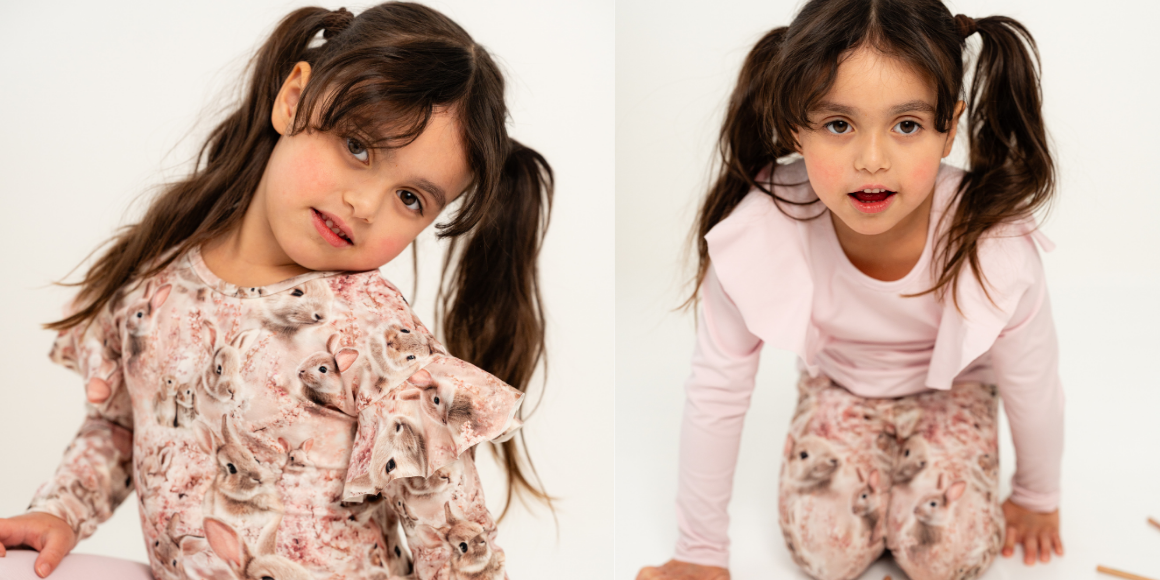
Our printed jersey fabrics are manufactured mainly in Portugal and partly in Lithuania. The material we use is GOTS-certified and consists of 95% organic cotton and 5% elastane.
Our long-term cooperation with suppliers has enabled us to develop our printed fabrics to be even higher quality and more durable. When designing our printed products, we pay special attention to minimising cutting waste. As a result, every printed product is unique and responsibly made.
Solid-colour jersey
Our solid-colour jersey fabrics are knitted in Latvia by a reliable, long-term partner. We use 95% organic cotton and 5% elastane as the materials. Our solid-colour jersey products are GOTS-certified and comply with the Öko-Tex 100 standard.
At Gugguu, it is important to us to know where and how our fabrics are made. Thanks to local production, we can carefully develop and monitor the production process. Our solid-colour jersey fabric is designed to withstand wear and washing while retaining a pleasant feel against the skin.
Jersey fabric
Printed jersey
Our printed sweatshirt fabrics are made in Portugal. The material consists of 95% organic cotton and 5% elastane, and its unbrushed surface is smooth and lightweight in structure. Products made from the fabric are GOTS-certified.
In the design process, we focus on minimising cutting waste, which makes every printed product unique. Our long-term collaboration with suppliers ensures that the printed sweatshirt fabric remains high-quality and durable in use.
Plain sweatshirt fabric
Our plain sweatshirt fabrics are knitted in Latvia, where we can closely monitor production and ensure its high quality. The material consists of 95% organic cotton and 5% elastane. The products also have GOTS certification and the Öko-Tex 100 standard.
The inner surface of the fabric is brushed, making it soft and warm. In addition, enzyme treatment prevents pilling and extends the product's lifespan. The result is a comfortable, durable sweatshirt fabric suitable for everyday wear, feeling good against the skin time after time.
Merino wool
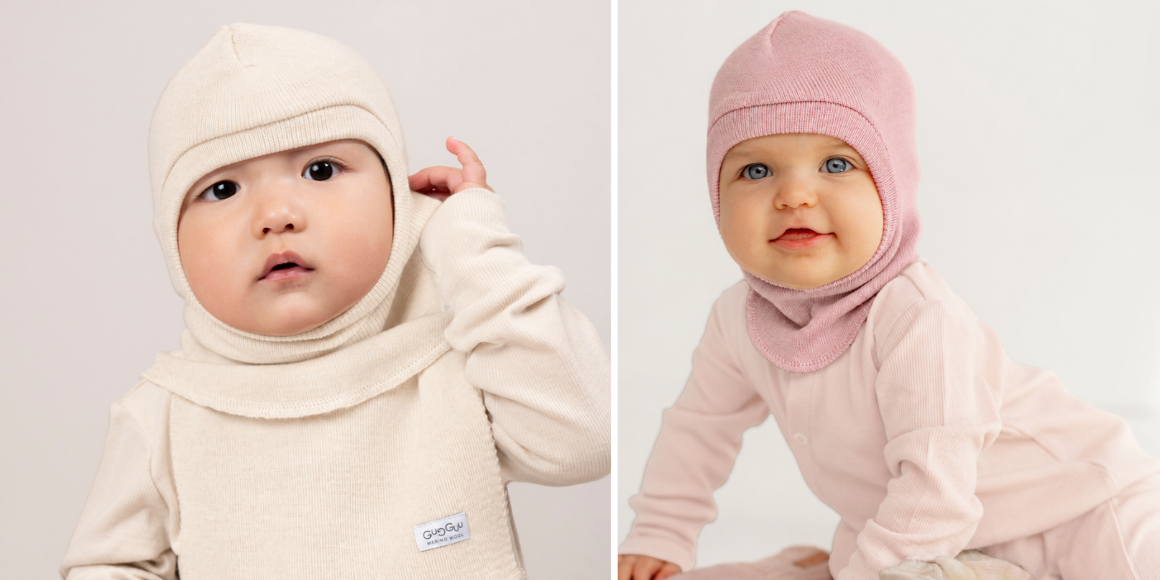
The merino wool we use comes from New Zealand, and the yarn is spun in Italy. All the wool we use is mulesing-free, as animal welfare is extremely important to us. Most of our merino wool yarn has the Öko-Tex 100 standard and RWS certification, which ensure a responsible production chain and a safe finished product.
Merino wool is naturally soft, warm and breathable, and repels dirt and moisture while feeling comfortable against the skin. It is also an antistatic material, and its properties make it excellent for both everyday and outdoor accessories and clothing.
Production
- Merino wool beanies and scarves are made in Lithuania
- Mittens and accessories from the Merinowool collection come from Finland
- Merino wool socks from Portugal
- Garments from the Merinowool collection (shirt, trousers, jumpsuit) are made in Latvia
Material compositions
- Merino wool beanies, scarves and mittens, as well as accessories from the Merinowool collection: 100% merino wool
- Socks: 85% merino wool, 13% polyamide, 2% elastane
- Shirt, trousers and jumpsuit from the Merinowool collection: 95% merino wool, 5% elastane
For merino wool products, we recommend gentle hand washing. Reshaping the garment after washing helps maintain its shape and extends its lifespan.
Outdoor fabrics
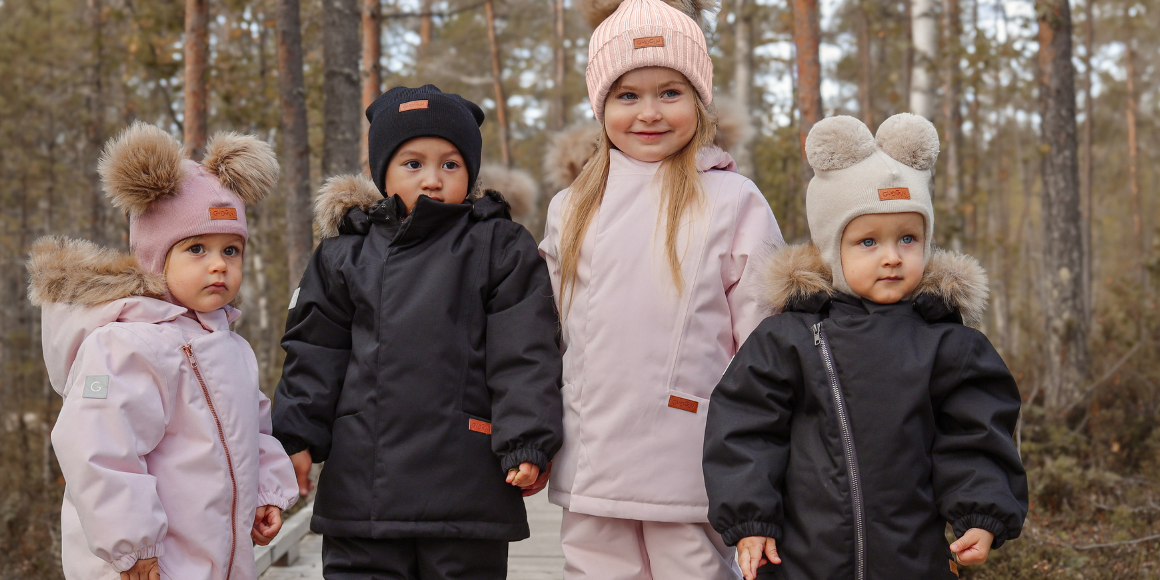
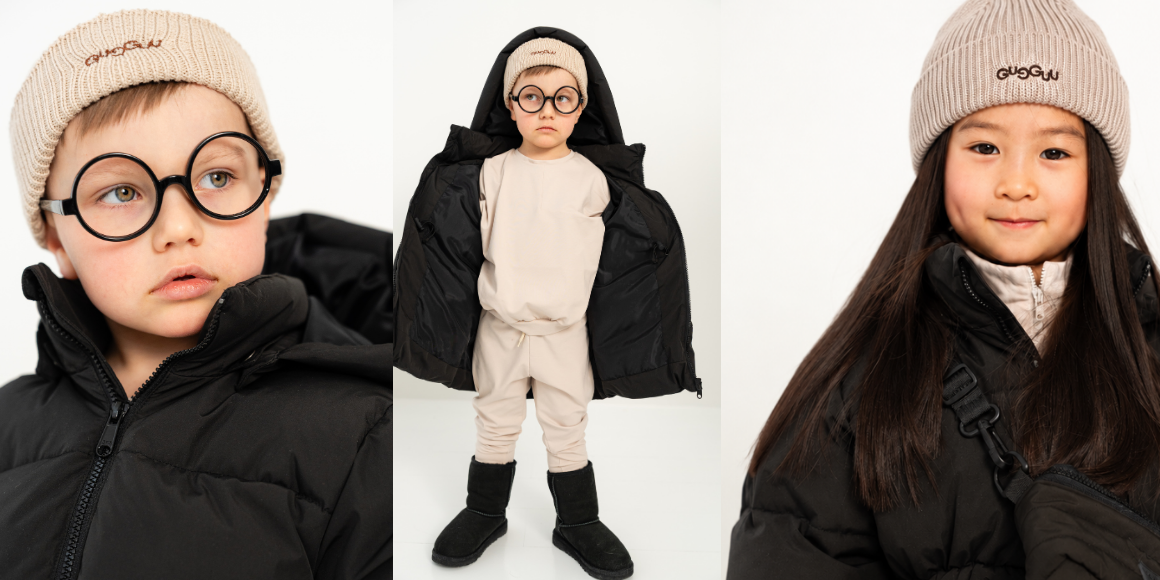
Gugguu's outerwear is manufactured at a Chinese SA8000-audited production facility, ensuring responsible and ethical working conditions. All materials have been carefully selected based on their durability, safety and comfort.
Outer material
For the outer material of padded garments, we use dense Oxford fabric (300D x 300D), which protects against both wind and water while maintaining breathability. The fabric has a TPU coating, and its water resistance is achieved with the environmentally friendly Bionic-Finish® Eco finish. The material's waterproof rating is 10,000 mm water column. Its breathability is 7,000 g/m²/24 h.
Reflective details enhance safety in the dark.
Padding
The warmth of padded garments is ensured by padding made of 100% recycled polyester. Lightweight yet effective padding (200 g/m²) keeps the warmth in without making the garment feel heavy or stuffy.
Lining
The lining is made of 100% recycled polyester. It feels comfortable against the skin and enhances the garment's comfort. In addition to its appearance, the lining is functional and withstands repeated use well.
Faux fur
Padded garments feature a detachable faux fur trim made of 52% acrylic, 35% modacrylic and 13% polyester. The faux fur can easily be freshened up by brushing it. We recommend removing the faux fur from the outerwear before washing to extend its lifespan.
Rib fabric
Our rib fabric is made in Portugal from 97% organic cotton and 3% elastane. Our rib products are GOTS-certified.
Rib is a stretchy, soft knit that adapts beautifully to movement and feels comfortable to wear. Thanks to its structure, the fabric is durable and retains its shape well. Rib is ideal for garments where fit, comfort and a stylish finish are combined.
The fabric naturally shrinks by approximately 6–8% in the wash, and this has already been taken into account in the sizing of the products. This means you can be sure that rib garments retain their fit wash after wash.
Cotton
The cotton yarn we use is made from 100% GOTS-certified organic cotton, which is spun in Germany. The certificate ensures that our cotton is grown without harmful chemicals and that the production process meets strict environmental and social responsibility criteria. In knit accessories, we use BIO quality, which also has GOTS certification.
Cotton is naturally breathable, soft and durable. It feels pleasant against the skin and is also ideal for sensitive skin. It withstands washing and wear well, making it an ideal material for knitted accessories.
Swimwear fabrics
Our solid-colour and printed swimwear fabrics come from Italy, and our printed swimwear fabrics are printed in Portugal.
More information about materials
Elastane
At Gugguu, it is important to us that our materials are both comfortable to wear and durable in everyday use. For this reason, most of our fabrics contain a small amount of elastane. Even a few percent makes a noticeable difference: it gives garments flexibility, improves their fit and helps the fabric regain its shape after use and washing.
Elastane is a synthetic fibre known for its excellent stretchability. It can stretch up to five times its original length and still return to its original size. Combined with natural fibres such as organic cotton or merino wool, elastane improves the comfort of a garment and extends its lifespan.
Although only a small amount of elastane is used, its benefits are clearly noticeable in everyday life: garments retain their fit, comfort and longevity. This aligns with our goal of making clothes that stand the test of time and repeated use.
Organic cotton
The organic cotton yarn we use is certified according to the GOTS (Global Organic Textile Standard). This ensures that our cotton is made from at least 95% organic material, with consideration for the environment and social responsibility.
Organic cotton differs from conventional cotton primarily in its cultivation methods. Synthetic pesticides and fertilisers are not used to grow it; instead, cultivation is based on organic methods. This conserves the soil, reduces water consumption and protects both the environment and farmers’ health. In addition, organic cotton cultivation often uses less water than conventional cotton production.
Polyamide
Polyamide is a synthetic fibre known especially for its durability, flexibility and resistance to wear. It was originally developed as a substitute for silk, and today it is widely used in sportswear, outdoor clothing and accessories that require exceptional strength and longevity.
Combined with natural fibres such as cotton or merino wool, polyamide extends the lifespan of garments and enhances their properties. It makes the fabric lightweight yet strong, helps it retain its shape from one wash to the next, and increases the material’s flexibility.
Polyamide is also a quick-drying and moisture-repellent fiber, making it an excellent choice especially for socks, outdoor clothing and technical products. As a result, garments remain comfortable to wear even when exposed to moisture or intensive use.
Certifications, standards and finishes
Öko-Tex® Standard 100
For our fabrics, we prefer both Öko-Tex® Standard 100 certification and the GOTS certification. Öko-Tex® Standard 100 is an international testing and certification system that ensures textile products do not contain harmful substances. This is especially important in children's clothing, as sensitive skin needs safe and clean materials.
The certification covers a wide range of tests. OEKO-TEX® tests, among other things:
- pH balance, ensuring that the fabric is gentle on the skin
- Formaldehyde content
- Pesticide residues
- Soluble heavy metals and chlorine compounds
- Preservatives, such as pentachlorophenol and tetrachlorophenol
- Allergenic and carcinogenic dyes
All tests are carried out in independent laboratories in accordance with strict international criteria. The standard is updated annually based on the latest scientific research, ensuring that it remains up to date.
When a product bears the Öko-Tex® Standard 100 label, it means that it has been tested and found safe even for the most sensitive uses, such as clothing for babies and young children. This gives consumers confidence that they can dress their children in these products without worry.
GOTS certification
GOTS (Global Organic Textile Standard) is an internationally recognized and respected certification for ecological and ethical production. It covers the entire production chain, from the cultivation of raw materials to the finished product.
The certification guarantees that the material used is made from at least 95% organic fibers. In addition, production is carried out in an environmentally friendly and socially responsible manner. This means, among other things, that no harmful chemicals are used in cultivation and that working conditions in production meet strict international criteria.
The GOTS label on a product assures consumers that the material has been produced responsibly, with consideration for both nature and people - from start to finish.
RWS – Responsible Wool Standard
In our merino wool products, we use RWS-certified wool (Responsible Wool Standard). RWS is an international certification that ensures the wool is produced with respect for both animal welfare and the environment.
The certification's key criteria are:
- Animal welfare: sheep are treated responsibly and allowed to live natural lives. RWS completely prohibits the mulesing method.
- Environmental responsibility: the facilities and farms where the wool is produced operate sustainably and minimize their environmental impact.
- Transparent production chain: every farm and factory involved in wool production is independently audited to ensure compliance with the certification requirements.
For consumers, the RWS label means that the wool has been produced responsibly, ethically, and sustainably from start to finish. This makes it a safe and reliable choice for children's clothing and accessories, for example.
SA8000 standard
SA8000 is an international standard that focuses particularly on ethical and safe working conditions in the textile industry.
The certification is based on the conventions of the ILO (International Labour Organization) and the UN's human rights principles. Its key criteria include:
- No child labor or forced labor
- A safe and healthy working environment
- Reasonable working hours and fair pay
- The right to organize and bargain collectively
- Non-discrimination and equal treatment
SA8000 certification means that manufacturing is carried out transparently and responsibly, respecting employees' rights and well-being. This ensures that the production chain of our outerwear is ethical from start to finish.
Bionic-Finish® Eco
Bionic-Finish® Eco is an environmentally friendly technology that provides fabrics with water and dirt repellency without harmful chemicals.
Traditionally, water resistance has been achieved with fluorocarbon-based treatments (PFC compounds), which place a burden on the environment and may also be harmful to health. Bionic-Finish® Eco was developed as a safe and eco-friendly alternative to these.
Its benefits are:
- Water resistance: protects against rain and moisture while maintaining the breathability of the fabric.
- Dirt repellency: dirt does not easily stick to the surface of the fabric, making the garment easier to use and extending its lifespan.
- Environmentally friendly: a completely PFC-free treatment that is safer for both people and nature.
Bionic-Finish® Eco makes our outerwear practical and durable for everyday use and changing weather conditions - without compromising on environmental responsibility.
Sustainability Report 2025
Read more about Gugguu's sustainability in Gugguu's 2025 Sustainability Report:
